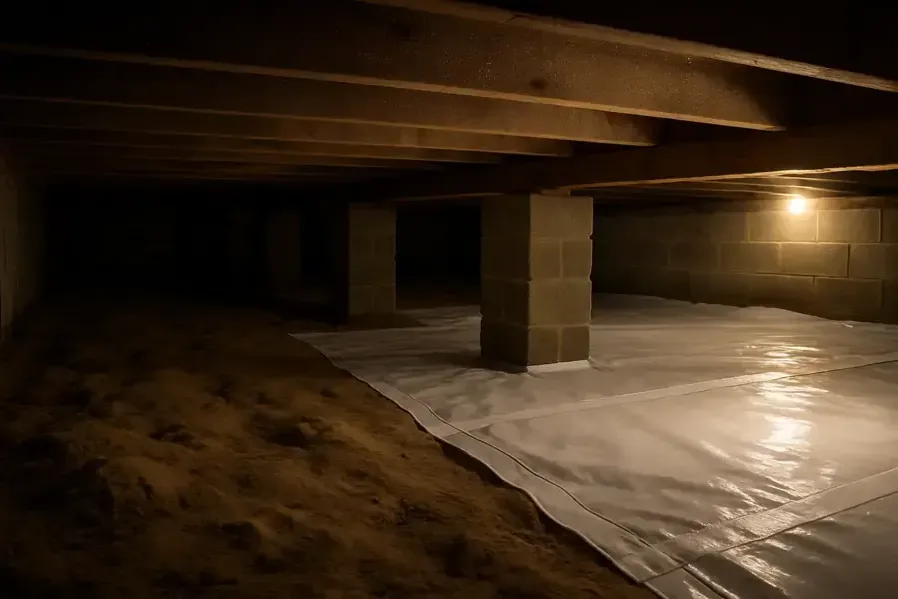
On July 24, 2026, more than three inches of rain fell in some areas of Hall County, and part of Falcon Crest Drive in Flowery Branch washed away. When that much water moves across the ground, the space under a raised floor is one of the first places it collects. Here is how to tell standing water from damp air, what to shut off, and what the extraction crew does first.
Key takeaways
- Standing water on the ground or vapor barrier under a floor needs pumping, not a fan and a wait.
- Puddles, wet insulation and dripping joists point to real water; a clammy feel with no puddles points to humidity.
- Georgia utility guidance says the main shutoff is often in the crawl space or basement near the front spigot, or near the water heater in slab homes.
- Closing the main shows whether a broken supply pipe or the rain is feeding the water.
- Pumping comes first, then insulation, joists and subfloor are checked with moisture meters and dried.
What a washed-out road says about the rain
A section of Falcon Crest Drive in Flowery Branch washed away during the July 24, 2026 storm, and more than three inches of rain fell in some areas of Hall County.
A road does not wash out unless a lot of water is moving, and that water looks for low ground around houses too.
For a home with a raised floor, low ground often means the crawl space. Water can seep in through foundation walls and vents, or it can collect on the ground and the vapor barrier under the floor.
Not every home has one. Some sit on a slab and others have a basement, so the first job is knowing what is under the floor.
- Wet mud or standing water on the ground under the home
- Insulation sagging or soaked between the floor joists
- Water marks on the foundation wall or on piers
- A damp, musty smell in the rooms above after a heavy rain
Standing water or damp air: how to tell the difference
A flashlight shone through the access hatch tells most of the story. There is no need to climb inside to check.
Signs of real water
Real water leaves marks that stay after the light moves on. A shine on the ground or vapor barrier, or a wet film on the soil, means water is present.
- Puddles or a wet shine on the vapor barrier
- Drips falling from the subfloor or from pipes
- Insulation hanging down or dark with water
- Water marks on piers or the foundation wall
Signs of humidity only
Damp air feels clammy and smells earthy, yet it leaves no puddles. Condensation on cold pipes or ducts and slightly darkened wood can show up without any pooled water.
Humidity is a moisture-control problem. Standing water is an extraction problem, and the two need different fixes.
- Beads of moisture on pipes or ductwork
- A musty smell without any visible water
- Dry soil and a dry vapor barrier
Shutting off what can add water
Before looking closer, rule out a supply leak. Georgia utility guidance says the main shutoff is often in the crawl space or basement near the front spigot, or near the water heater in slab homes.
Closing it takes a moment and shows whether a broken supply pipe or the rain is feeding the water.
If water keeps appearing after the rain has stopped and the main is closed, rain or groundwater is the likely source. If it stops growing once the main is closed, a supply pipe is the likely source.
Crawl spaces hold wiring, ductwork and slick plastic over uneven ground. With standing water below, entry is a job for the crew.
- Close the main shutoff, whether it sits near the front spigot or by the water heater
- Turn off power to equipment under the floor only from a dry spot at a dry panel
- Stay out of the crawl space while water is standing in it
- Photograph the hatch view and any water marks for the insurer
Why the crawl space matters to the rooms above
Water under a floor does not stay there. Moisture moves up into the subfloor, joists and any insulation between them, and it can reach flooring and baseboards above.
Wet insulation is a particular problem because it holds water against the wood instead of letting it dry.
A closed space with little air movement dries slowly, so wet wood can stay wet for a long time after the rain is gone.
What the extraction crew does first
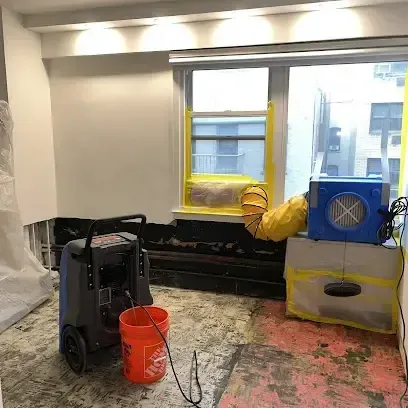
The order of work matters, and pumping always comes before drying. A crawl space water removal job starts by getting the water off the ground and the vapor barrier.
Pumping and clearing
A pump and hose move the water out, and portable extractors take up what is left in low spots. This is the same water extraction work used inside a house, adapted to a tight space.
Soaked insulation is pulled out because it will not dry in place.
- Standing water pumped out and discharged away from the foundation
- Mud and debris cleared from the ground and piers
- Wet insulation removed and bagged
- The vapor barrier checked for tears and displaced sections
Drying what stays
Joists and subfloor stay in place, so they are measured with a moisture meter and dried with fans and dehumidifiers.
Readings are repeated until the wood returns to a normal level. Photos and notes are kept for the claim, which matters after a storm and flash flood cleanup.
- Moisture meter readings on joists and subfloor
- Drying equipment placed to dry the cavity and the floor above
- Repeat readings until the wood is dry
What happens when the water is left alone
Standing water invites mold, rot and a damp smell that rises into the living space.
Wood swells, subfloors can warp and flooring above may cup or buckle.
The longer the water sits, the more material has to be replaced instead of dried, so quick pumping keeps the job smaller.
- Warped subfloor and sagging insulation
- Rust on fasteners and metal supports
- Odors that travel up through the floor
- Wider drying needs in the rooms above
Getting ready before the next heavy rain
A few checks while the weather is dry make the next storm easier to handle.
- Look at where downspouts empty and keep that water moving away from the foundation
- Keep the crawl space hatch clear so it can be opened without moving furniture or boxes
- Photograph the crawl space while it is dry for a before-and-after comparison
- Find the main shutoff and make sure everyone in the house knows where it is
Questions
How can I tell if my home has a crawl space?
Look for a small access hatch in the foundation wall, a panel in a closet floor or vents around the foundation. Homes on a slab have none of these. A crew can confirm on site.
Is it safe to go into a crawl space with standing water?
It is better to stay out. Wiring, ductwork and wet plastic over uneven ground make entry risky, and the crew has pumps and protective gear for the job.
Will a fan or dehumidifier dry a crawl space with standing water?
No. The water has to be pumped out first, and then the wood is dried. Running equipment over standing water only moves moisture around.
Does homeowners insurance cover rain water in a crawl space?
It depends on the policy and on how the water entered. Flooding and seepage are often treated differently from a sudden pipe break, so read the policy wording or ask the insurer, and keep photos and readings.
Why does water keep coming back to the same spot?
Pumping removes the water but not the source. Downspouts, grading, a leaking pipe or high groundwater can keep feeding the space, so the source needs to be found and fixed as well.