Crawl Space Water Removal in Flowery Branch, GA
Crawl space water removal in Flowery Branch, GA pumps water off the vapor barrier, pulls soaked insulation from the joist bays and dries the framing under the floor before humidity climbs into the rooms above.
(888) 532-4616Water pooled under the house? Get it pumped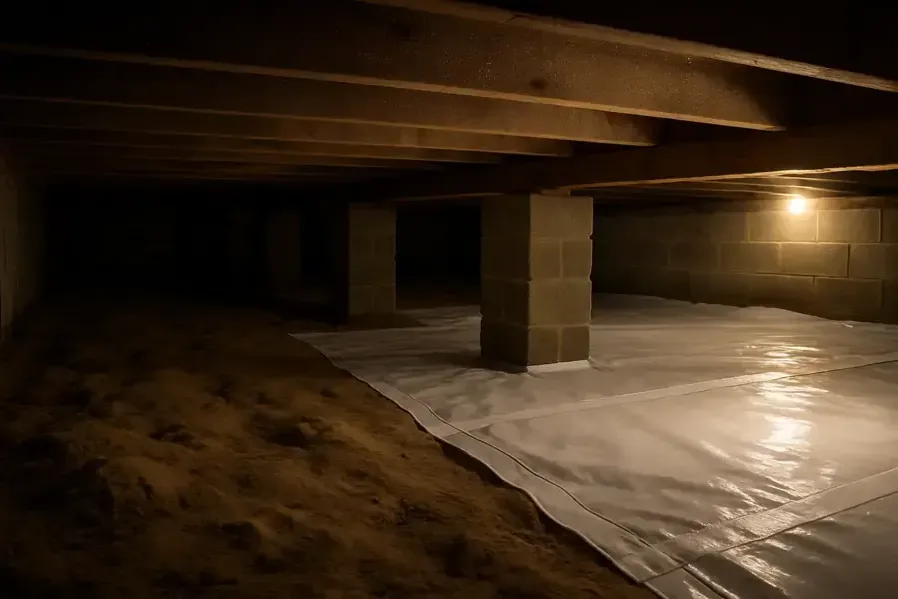
First moves for crawl space water removal
- 1
Stay out near power
Wet wiring under a house is a shock risk.
- 2
Find the source
Check for running water, a leak or runoff.
- 3
Shut the main if needed
Close it if a supply pipe is leaking.
- 4
Note the smell
A sewage odor means Category 3 water.
The standard behind every crawl space water removal job
Dispatch at any hour
Active water is treated as urgent around the clock, because drywall and pad keep wicking until extraction starts.
Dried to a reading
The drying team works to the IICRC S500 standard and pulls equipment only when the meters say dry.
A file the adjuster can use
Moisture maps, daily psychrometric logs and timestamped photos are taken before anything is torn out.
Built for Piedmont houses
Clay lots, walkout basements, crawl spaces and attic air handlers shape how water moves in these homes.
What does crawl space water removal cost in Flowery Branch, GA?
Crawl space water removal usually runs $1,500 to $10,000 or more. Pumping clean water and drying is the low end; a sewage leak with insulation and barrier replacement is the high end. Category, square footage, materials and drying speed set the number.
| Size of the loss | Typical range | What it usually covers |
|---|---|---|
| Pump out and dry | $1,500 to $3,500 | Category 1 water, Vapor barrier kept, Air movers and dehumidifier |
| Insulation and barrier | $3,500 to $6,500 | Wet batts removed, New vapor barrier, Joists dried |
| Sewage under the floor | $6,500 to $10,000+ | Category 3 water, Protective gear and containment, Antimicrobial treatment |
Ranges are typical, not a quote: the water category, square footage, material class and how fast drying started move the number most. Run the water damage cost calculator for a closer planning figure.
The crawl space water removal process from first reading to dry
- 1
Inspect
Source traced and moisture mapped.
- 2
Pump
Water pulled off the barrier.
- 3
Remove
Wet insulation and debris out.
- 4
Dry
Joists and subfloor dried to readings.
Plenty of houses in and around Flowery Branch sit over a vented crawl space, often on a slope where the uphill side drains straight under the floor. Water down there is easy to miss, and it rarely dries on its own in a humid Georgia summer.
Where crawl space water comes from
The source decides the category and the plan. The tech checks the grade, the downspouts, the supply and drain pipes and the HVAC condensate drain before any pumping starts.
- Storm runoff through vents and the foundation
- A split or leaking supply pipe under the floor
- A cracked drain or sewer pipe, which makes it Category 3
Sewage under the house is handled with containment and protective gear from the start.
Musty smell rising from under the floor? Water on the vapor barrier keeps the whole house damp.
(888) 532-4616Get eyes under the floorDrying the framing under the house
Once the water is pumped off the vapor barrier, soaked fiberglass batts come down, because they hold water against the subfloor. Air movers and a dehumidifier sized to the space then dry the joists, sill plates and subfloor.
- Wet insulation bagged and removed
- Vapor barrier lifted, cleaned or replaced
- Readings on the joists and the subfloor above
Vents do not dry a crawl space
Open vents pull in humid summer air, which can add moisture rather than remove it. Drying works with the space closed up and a dehumidifier pulling water out of the air.
Keeping water out from under the floor
Gutters and downspout extensions that move roof water away, grading that falls away from the foundation and a sound vapor barrier are the main defenses. Pipes in the crawl space need insulation before the first hard freeze.
The EPA indoor air quality pages explain why moisture under a house matters upstairs, and UGA Extension publishes home moisture advice for Georgia.
Crawl space water removal across Flowery Branch and south Hall County
One dispatch covers every neighborhood listed here, around the clock.
The response team covers ZIP 30542 from the historic downtown by the depot and the Lake Lanier shoreline out to Spout Springs, McEver Road along Mud Creek, Falcon Crest Drive and Chestnut Mountain.
Nearby coverage reaches Buford, Gainesville, Sugar Hill, Cumming, Suwanee, Oakwood and Braselton.
Crawl Space Water Removal questions in Flowery Branch, GA
How do I know if there is water in my crawl space?
Common signs are a musty smell, high humidity upstairs, cupping hardwood, a soft spot in the floor or a sudden jump in the water bill. A look through the access door after heavy rain usually settles it.
Can crawl space water dry out on its own?
Rarely in Georgia. The vapor barrier holds the water, insulation stays soaked and humid air keeps the space damp. Pumping, removal of wet insulation and dehumidification bring the joists back to a dry reading.
Is crawl space water removal covered by insurance?
Water from a sudden pipe break is often covered after the deductible. Long-term seepage or runoff usually is not, and surface water is a flood coverage question. Coverage depends on your policy, so check with your own insurer.
Why does wet insulation come out during crawl space water removal?
Fiberglass batts soak up water and hold it against the subfloor and joists for weeks. Removing them lets the framing dry and keeps the moisture from feeding growth inside the 24 to 48 hour window.
What if sewage leaked into the crawl space?
Then it is Category 3 water. The crew works in protective gear, removes contaminated insulation and barrier, cleans the soil surface and applies an EPA-registered antimicrobial at its dwell time before drying.
Water under the house? Get the crawl space dried out.
The crew pumps it off the vapor barrier, pulls wet insulation and dries the joists to a reading.