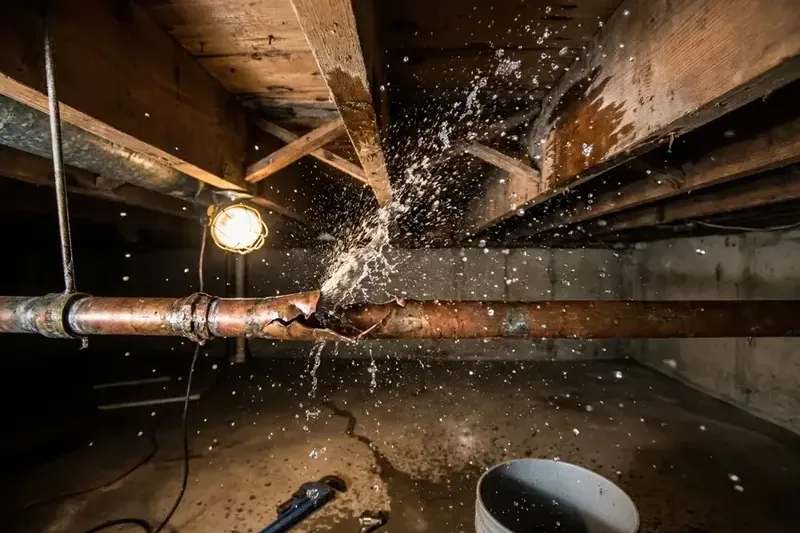
A split pipe keeps pouring water into a wall or ceiling until someone closes the main shutoff valve. Finding that valve before an emergency is one of the most useful things a homeowner can do before winter. Georgia utility guidance gives a clear starting point for where to look.
Key takeaways
- Georgia utility guidance says the main shutoff is often in the crawl space or basement near the front spigot, or near the water heater in slab homes.
- Most Flowery Branch homes were built after 2000, so many valves have rarely been turned and can be stiff.
- A tag on the valve and a photo on a phone save time when the household is stressed.
- After a split pipe, close the main first, then open a faucet to drain the pipes and turn off power to wet areas from a dry spot.
- Hidden splits soak insulation and drywall, and the drying team removes what cannot dry in place.
Where Georgia utility guidance says to look
Utility guidance for Georgia homes names two common spots for the main shutoff. Which one applies depends on how the house sits on the ground.
Homes with a crawl space or basement
In these homes, the main shutoff is often in the crawl space or basement near the front spigot. A good habit is to find the outdoor spigot at the front of the house, then look on the inside of that same wall.
- Look along the wall nearest the front spigot
- Check where the water pipe enters the house
- Look for a round handle or a lever on the pipe
Slab homes
In slab homes, the guidance points to the area near the water heater. The garage or utility closet where the tank sits is the place to start.
- Open the garage or closet that holds the water heater
- Follow the cold water pipe leading into the heater
- Look for a valve on that pipe before it reaches the tank
Why the age of local homes matters
Flowery Branch grew from 1,806 residents in the 2000 census to 9,391 in 2020, and most of its homes date from after 2000.
That mix means many homes have valves that were installed once and rarely touched. A valve that has sat for years can be stiff or stuck, and the middle of a leak is the wrong time to find out.
Turning it gently closed and open again now and then keeps it working.
A simple walk-through before winter
A short walk-through turns a panic into a routine.
- Find the valve and note which way the handle turns to close it
- Turn it gently closed and open again to confirm that it moves
- Tag it with a bright label and take a photo
- Check the outdoor spigot at the front and the shutoff valves at sinks and toilets
- Show every adult in the household, and tell renters to ask the landlord
Other shutoffs, and what to do when one will not turn
Smaller valves can stop a leak without turning off the water to the whole house, and the main shutoff is for everything else.
Smaller valves that limit a leak
The main shutoff is the last resort, and smaller valves can stop a leak without turning off water to the whole house. Knowing them saves the household from living without water while a repair is made.
Most fixtures and appliances have their own valve, and each one limits the damage from a single failure.
- The cold supply valve at the water heater, which stops new water from entering the tank
- The small valves under sinks and behind toilets, which close with a quarter turn or a few twists
- The supply valve behind the washing machine, which many households never touch
- The valve feeding the refrigerator ice maker or a water filter
- The outdoor spigot at the front of the house, which can have its own interior valve
When a valve will not turn
A valve that will not move is a warning sign. Forcing it can break the valve and make the leak worse.
A plumber can replace a stuck or leaking valve, and that job is better done before an emergency than during one.
Some valves leak a little at the stem when they are turned. A slow drip around the handle is worth fixing, because it can wet the wall or floor around it for a long time before anyone notices.
- Do not use pipe wrenches or extra leverage on an old handle
- Note whether the valve is a round handle or a lever, since that tells the plumber what to bring
- Check the area around the valve for stains, rust or a damp patch
Freeze prep belongs on the same list
Pipes in unheated spaces are the ones to watch when temperatures fall. Crawl spaces, garages and exterior walls deserve a look before the first cold snap.
A frozen pipe often splits quietly and shows itself only after it thaws and starts to leak.
- Disconnect garden hoses from outdoor spigots
- Keep cabinet doors open on exterior walls during a cold spell
- Let a faucet drip when a hard freeze is forecast
- Know the shutoff location before the first cold night
What to do when a pipe has already split
Water already in the structure keeps spreading after the supply stops. Closing the main stops new water, but it does nothing about what is already inside the wall.
The steps below apply to any burst pipe, frozen or not.
Call the plumber and the drying team in parallel when possible, because repair and drying are separate jobs. The pipe is fixed first so that no new water arrives, and the drying work starts as soon as the area is safe to enter.
- Close the main shutoff
- Open a faucet at the lowest point to drain what is left in the pipes
- Turn off power to wet rooms from a dry spot
- Move furniture and valuables out of the wet area
- Photograph the damage before anything is moved
- Get a plumber for the repair and a drying team for the water
What the drying team removes after a hidden split
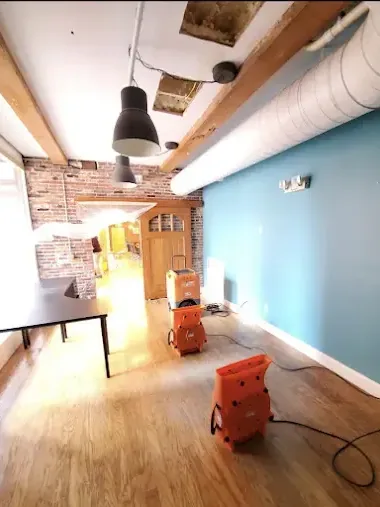
Water from a split pipe often travels along framing and collects in places nobody sees. The drying team starts by finding where it went, using moisture meters on walls, ceilings and floors.
Materials that cannot dry in place come out, and the rest is dried. The water extraction crew handles any standing water first.
A split inside a wall can run for hours before a stain appears, so the wet area is often larger than the visible spot. The readings show how far the water went, and that decides how much material is opened up.
- Wet drywall and insulation removed from the affected wall or ceiling
- Standing water extracted from floors and cavities
- Flooring lifted where water sits beneath it
- Framing dried and checked with readings
- Photos and readings kept for the insurer
Questions
How do I know whether my home is a slab home?
A slab home has no crawl space hatch and no basement stairs, and the floors sit on a concrete foundation. A plumber or the restoration crew can confirm it on site.
Is there more than one main shutoff?
Some homes have a valve at the meter and another where the pipe enters the house. The one inside the house is usually easier to reach in an emergency, so it is the one to find first.
Does closing the main stop a water heater from leaking?
It stops new water from entering the tank, but the tank still holds water that can spill. A cold supply valve at the heater, together with the main, cuts off the supply.
Should the main be closed when leaving for a trip?
Many homeowners close it before travel, because it keeps a hidden leak from running unseen. Remember that the water heater and ice maker need the supply back when the household returns.
What should renters do about the shutoff?
Ask the landlord or property manager where it is and who may close it. Take a photo once it is found, and keep that photo with the lease papers.
Can a leak inside a wall be found without opening it?
Often, yes. Moisture meters read dampness through the surface, and the readings show where water traveled. The crew opens only the places where the readings say material is wet.