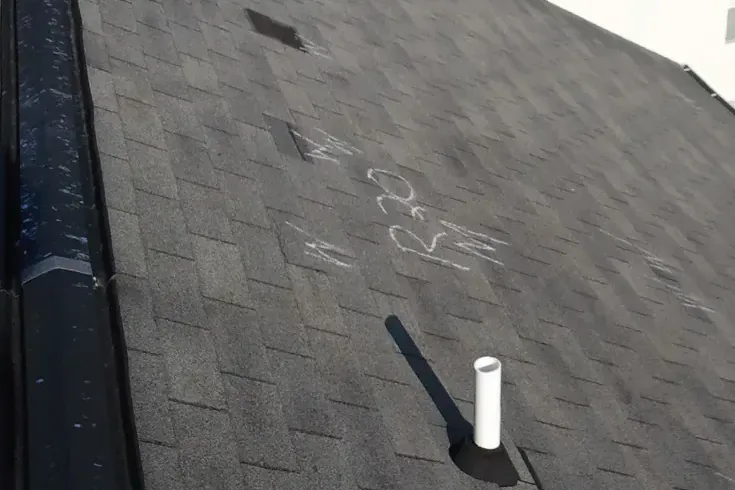
Strong thunderstorms can drop limbs and trees onto roofs in Sugar Hill's wooded neighborhoods. Rain that comes in through a roof puncture soaks the insulation and ceiling drywall first, and it may not show for a day or more. By the time a stain appears, the damage above the ceiling can already be wide.
Key takeaways
- Limbs and trees from strong thunderstorms can puncture a roof, and the first damage is usually hidden above the ceiling.
- Rain that enters through a roof puncture can soak insulation and drywall and may not show for a day or more.
- EPA guidance says mold can start growing on wet materials within 24 to 48 hours, so waiting is risky.
- Before the roof is patched, protect the room, turn off power to wet ceiling fixtures and photograph everything.
- Wet insulation is pulled out because it will not dry in place, and drywall is dried or replaced based on readings.
How a storm opens a roof
Sugar Hill has wooded neighborhoods, and strong thunderstorms can drop limbs and whole trees onto roofs there. A falling limb can puncture shingles and decking, and a tree resting on a roof can open a much larger gap.
Even without a direct hit, strong wind can lift shingles and loosen flashing around vents and chimneys. Rain finds those small openings quickly.
Leaves, needles and small branches can pile up in valleys and gutters after a storm. That debris holds water against the roof edge and gives rain a way under the shingles.
- A limb or tree lying on the roof
- Missing or curled shingles in the yard or gutters
- Bent or lifted flashing around vents, pipes and chimneys
- Daylight showing through the roof decking from the attic
Why the ceiling lags behind the leak
Water from a roof opening does not go straight to a stain. It lands on the attic floor first, and the insulation soaks it up.
What happens in the attic
Wet insulation holds water against the ceiling drywall and spreads it sideways. Rain that enters through a roof puncture can soak insulation and ceiling drywall and may not show for a day or more.
- Insulation that looks flat, dark or clumped
- Damp or darkened wood around the opening
- A musty smell when the attic hatch is opened
What shows on the ceiling
The signs below usually appear after the damage has already spread above.
- A yellow or brown stain that grows after each rain
- Paint that bubbles, cracks or peels
- Drywall that sags or feels soft
- Drips from a light fixture or vent
What to do before the roof is patched
A roofer fixes the opening, but the room below needs protection first. Do not climb onto a roof damaged by a fallen tree; let a roofer and tree service make it safe.
The goal is to keep more water from reaching the drywall and to keep the evidence. Photos taken before anything is moved help the roofer, the drying crew and the insurer.
- Move furniture, rugs and electronics out from under the stain
- Place buckets under drips and cover items that cannot be moved with plastic sheeting
- Turn off power to ceiling fixtures and fans that look wet, from a dry panel
- Photograph the ceiling, the attic and the roof damage
- Ask the roofer to tarp the opening if the repair cannot be done right away
Why the first two days matter
EPA guidance says mold can start growing on wet materials within 24 to 48 hours. Insulation and drywall are exactly the kind of materials that stay wet when nobody knows they are wet.
That is the reason a small stain deserves attention. The visible spot is often the smallest part of the wet area.
A fan pointed at a ceiling stain dries the surface only. The insulation and the back of the drywall stay wet, and the stain often returns.
- Wet insulation pressed against drywall keeps the ceiling wet
- A closed attic with little air movement dries slowly
- Waiting for the next rain to confirm a leak lets the wet area grow
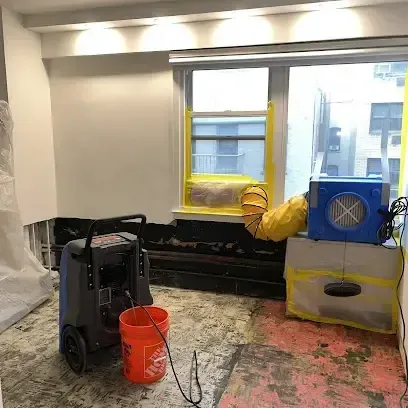
What the crew pulls out and dries
A roof leak water damage job starts in the attic. The crew traces the wet area from the stain back to the opening and removes insulation that will not dry in place.
Then structural drying takes over. Moisture meters map the wet drywall and framing, and drying equipment runs until the readings come back to normal.
A stain on one ceiling can come from an opening several feet away, because water follows rafters and pipes before it drops. Tracing the path is part of the work, and the readings show where the wet area ends.
- Wet attic insulation removed and bagged
- Sagging or soft drywall opened or replaced
- Moisture readings taken across the ceiling and nearby walls
- Framing dried and checked before anything is closed up
- Photos and readings kept for the insurer
Working with the roofer and the insurer
Storm damage coverage depends on the policy and on the cause, so it helps to keep clear records from the start. The roofer's note about where and how the roof opened is useful alongside the drying readings.
Homeowners can also read about the Sugar Hill water damage restoration services, or see the overview of roof leak water damage work.
- Save the roofer's invoice and any written description of the damage
- Keep photos of the roof, the attic and every wet ceiling
- Keep the drying readings and equipment notes
- Ask the insurer how storm damage and interior water damage are handled
Getting ready before the next storm
A few habits cut the odds of a hidden leak going unnoticed.
Homeowners in wooded areas gain the most from this routine. A quick look from the ground after each strong storm is far easier than a repair after a ceiling comes down.
- Trim limbs that hang over the roof
- Look at the roof from the ground after every strong storm
- Check the attic with a flashlight after heavy rain
- Clear gutters so water does not back up under the shingles
Questions
How long can a roof leak go unnoticed?
Rain through a roof puncture can soak insulation and drywall and may not show for a day or more. A slow leak can run even longer without a visible stain.
Is a small ceiling stain a big problem?
The stain is usually the smallest part. Wet insulation and drywall above it can cover a much larger area, so moisture readings matter more than the size of the spot.
Should wet attic insulation be left to dry?
Usually not. Insulation holds water and dries slowly, so it is typically pulled out and replaced once the roof is repaired.
Does the ceiling have to be opened?
If drywall is sagging, soft or wet through, it is opened or replaced. If it is only damp, drying equipment may work without removing it, and readings decide.
Who should deal with a tree that landed on the roof?
A roofer and a tree service. Climbing onto a damaged roof is unsafe, and the interior water problem can be handled at the same time.
Can a roof leak happen without a visible hole?
Yes. Lifted shingles, loose flashing and clogged gutters can let water in without any hole a person can see from the ground. A ceiling stain after a storm is a reason to check the attic.