Structural Drying and Dehumidification in Sugar Hill, GA
Water that is out of sight is still in the walls. The drying team uses meters and thermal imaging to find it, then runs air movers and dehumidifiers until every reading matches dry.
(888) 532-4616Call to plan the drying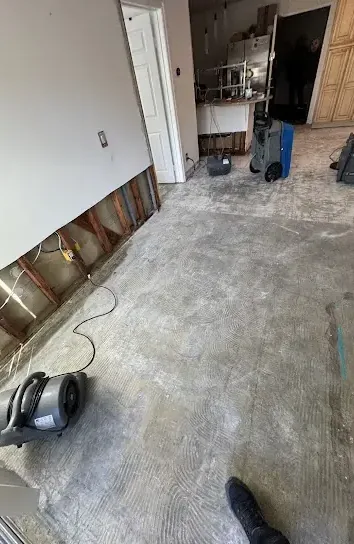
First moves for structural drying and dehumidification
- 1
Map the moisture
Meters and imaging mark every wet material.
- 2
Set the equipment
Air movers and dehumidifiers are placed to match the map.
- 3
Read and adjust
Readings are logged and units are moved.
- 4
Confirm the goal
Equipment leaves once everything reads dry.
The standard behind every structural drying and dehumidification job
Dispatch at any hour
Active water is treated as urgent around the clock, because drywall and pad keep wicking until extraction starts.
Dried to a reading
The drying team works to the IICRC S500 standard and pulls equipment only when the meters say dry.
A file the adjuster can use
Moisture maps, daily psychrometric logs and timestamped photos are taken before anything is torn out.
Built for Piedmont houses
Clay lots, walkout basements, crawl spaces and attic air handlers shape how water moves in these homes.
What does structural drying and dehumidification cost in Sugar Hill, GA?
Drying one room with a Class 1 or 2 loss usually costs $1,200 to $2,800, and the figure grows with the number of rooms, the water class and how dense the wet materials are, since hardwood and concrete dry slowly.
| Size of the loss | Typical range | What it usually covers |
|---|---|---|
| One room, Class 1 or 2 | $1,200 to $2,800 | Air movers, Dehumidifier, Meter logs |
| Several rooms, Class 3 | $2,800 to $5,500 | Wider equipment setup, Wall openings, Daily checks |
| Class 4 materials | $5,500 to $8,000+ | Specialty drying, Long equipment run, Documented goals |
Ranges are typical, not a quote: the water category, square footage, material class and how fast drying started move the number most. Run the water damage cost calculator for a closer planning figure.
The structural drying and dehumidification process from first reading to dry
- 1
Map
Wet materials are marked.
- 2
Set
Equipment is placed to match the map.
- 3
Monitor
Readings are logged each visit.
- 4
Finish
The dry goal is confirmed.
Extraction removes the water you can see, and drying handles the rest. Moisture travels into framing, subfloors and drywall, and it has to be driven back out with controlled airflow and dehumidified air. Wet materials left too long can warp, stain or crumble.
How drying is measured
After extraction, moisture meters and thermal imaging confirm where water traveled, and readings from unaffected rooms set the dry goal for each material.
- Meters read moisture inside wood and drywall
- Imaging shows cool, wet areas
- Logs track progress every visit
Equipment is moved and adjusted as areas dry, so no pocket is left damp behind a wall or under a floor.
Hidden moisture keeps damaging framing and drywall. Call and the drying team can plan the equipment and the readings.
(888) 532-4616Call to plan the dryingWhy timing matters
EPA guidance says mold can start on wet materials after 24 to 48 hours, so drying equipment is set once the standing water is gone and runs continuously until readings fall. The visit schedule follows the readings, so units never run longer than needed.
- Air movers push air across wet surfaces
- Dehumidifiers pull moisture from the air
- Openings let trapped cavities breathe
Trade note
A room can feel dry to the touch while the wall behind it reads wet. Equipment should stay until the meters, not the surface, say the materials are dry.
Related work
Drying follows water extraction on nearly every job, and it is also the closing step for burst pipe water damage.
Structural drying and dehumidification across Sugar Hill and nearby communities
One dispatch covers every neighborhood listed here, around the clock.
Structural drying runs across the city, from Downtown Sugar Hill and homes along Georgia State Route 20 to Twin Creeks, River Falls and The Glen at Level Creek, with equipment sized to each property.
The same service nearby: structural drying and dehumidification in Flowery Branch, Suwanee, Buford.
Structural Drying and Dehumidification questions in Sugar Hill, GA
How long does structural drying take?
Several days is typical, though thick materials such as hardwood and concrete can take longer. Readings, not a calendar, decide when equipment leaves, and the team shares the log at each visit.
Why are walls or floors sometimes opened?
Closed cavities trap moisture. Small openings let air and dry air reach insulation and framing, which shortens the drying time and protects the framing behind them.
Is the equipment noisy?
Air movers and dehumidifiers run steadily and can be loud. The team places them to match the moisture map and removes them once the goal is met, and the noise ends when the last unit leaves.
What does dry actually mean?
Dry means the moisture content of each material matches the reading from unaffected materials in the same home, not just a surface that feels dry, and the log shows each material reaching it.
Can drying prevent mold?
It cannot promise that, but removing moisture quickly helps. Mold can start on wet materials after 24 to 48 hours, so early drying is the best defense.
Dry every layer before repairs begin
Phone the drying team about the wet structure and the mapping, equipment and monitoring steps can be set up for your home.