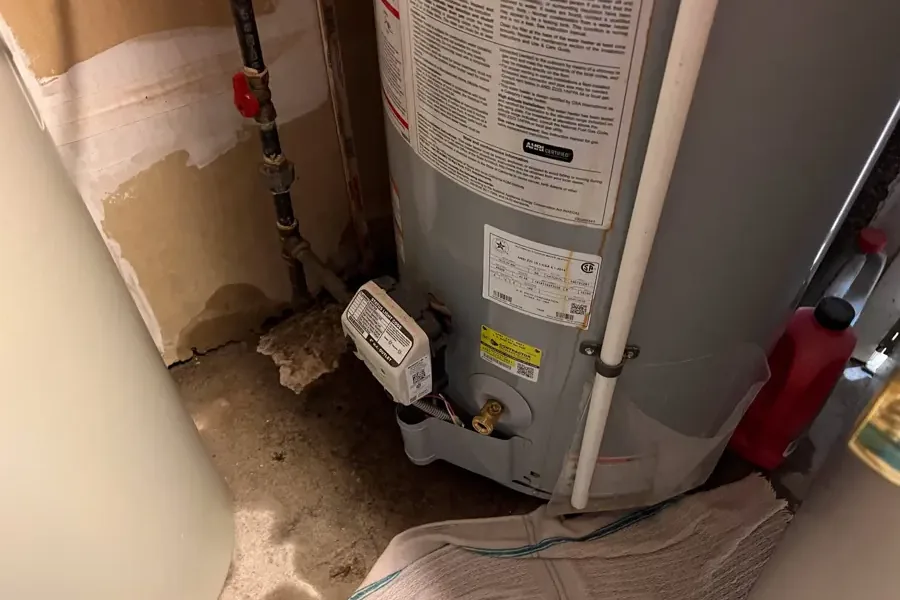
The City of Sugar Hill operates its own natural gas utility, which matters when a water heater starts to leak. A gas-fired tank puts water and gas in the same corner of the house. If there is any gas smell, the water can wait, and the household cannot.
Key takeaways
- A gas smell near a leaking water heater is a reason to leave the building and call from outside before any cleanup starts.
- The City of Sugar Hill operates its own natural gas utility.
- Close the cold water supply valve to the tank once the home is safe.
- Where the tank sits decides how far the water spreads: closet, garage or attic.
- Extraction comes first, then wet drywall, baseboard and flooring are removed or dried based on readings.
Gas first, water second
A leaking tank with a gas smell nearby is a safety problem before it is a water problem. Gas does not mix with sparks, flames or electrical switches.
Everyone leaves the building first, and the call to the gas utility is made from outside.
This applies to any gas appliance near the leak, such as a furnace or dryer in the same closet or garage. A leak that has also reached a gas appliance is a reason to wait for the utility before anyone goes back inside.
- Leave the building with everyone in it
- Do not flip light switches, light flames or run appliances on the way out
- Call the gas utility from outside, away from the building
- Stay out until the utility says the home is clear
Stopping the water
Once the home is safe to enter, stopping the supply keeps the leak from getting worse. A tank empties itself onto the floor, but it cannot refill if the supply is closed.
If there is any doubt about the power, leave the breaker alone and wait for an electrician. Water and live circuits are a worse risk than a wet floor.
- Close the cold water supply valve on the pipe feeding the tank
- If that valve is missing or stuck, close the main shutoff
- For an electric heater, switch off its breaker only from a dry spot at a dry panel
- Stay out of standing water near outlets, cords and appliances
- Photograph the tank, the floor and the damage before anything is moved
Where the tank water goes
A full tank holds enough water to soak the area around it quickly. The location of the tank decides what gets wet.
In every case the tank is only the source. The damage grows along floors, walls and ceilings, and that is why readings matter more than the size of the puddle.
A tank in a closet
Water runs under the closet door, into the hallway and into the wall framing around the tank.
- Baseboard and drywall at the base of closet walls
- Flooring in the hallway or room outside the closet
- Stored items on the closet floor
A tank in a garage
Concrete floors spread water wide. The framing at the base of garage walls and anything stored on the floor sits in it.
- Boxes and cardboard on the floor
- Drywall at the base of the walls
- Water working under a door into the house
A tank in an attic
An attic tank sends water into insulation and through the ceiling below, and the damage can show in a bedroom or hallway first.
- Wet insulation around the tank
- Ceiling stains below the attic
- Sagging drywall
Signs a water heater may be about to leak
Tanks often give warnings before they fail. A quick look every few months catches most of them.
- Rust stains or flaking at the base or on the connections
- A damp spot, puddle or mineral crust on the floor under the tank
- A relief valve that drips or weeps
- Rumbling or popping when the water heats
- Water that looks rusty when the hot tap first runs
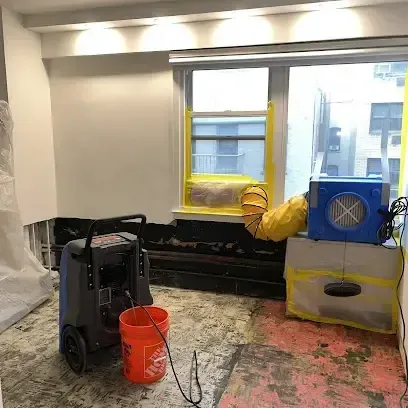
What extraction and drying involve
A water heater leak cleanup starts with the water on the floor. The water extraction crew removes standing water, then checks the walls, flooring and cabinets nearby with moisture meters.
What cannot dry in place comes out, and the rest is dried with equipment until the readings return to normal.
Cabinets and vanities near the heater often soak up water at the base. Toe kicks and bottom shelves are checked, and some are removed to let the wood dry.
- Standing water extracted from the floor
- Wet baseboard, insulation and drywall removed where needed
- Flooring lifted when water sits beneath it
- Moisture readings taken in nearby rooms
- Drying equipment placed and checked until the area is dry
Why the first two days matter
EPA guidance says mold can start growing on wet materials within 24 to 48 hours. A closet or garage wall that stays wet behind the baseboard is a good place for that to happen.
Fast extraction and drying keep more of the building in place, and they shorten the repair.
- Wet drywall and baseboard hold water behind a painted surface
- Stored cardboard and fabric in a garage or closet stay damp for days
- A closed closet or cabinet traps moisture and dries slowly
After the cleanup: replacing the tank
A tank that leaks through its shell is replaced and not patched. A plumber handles the replacement, and the cleanup and the plumbing work are best planned together so wet materials are not covered up.
The overview of water heater leak cleanup explains how the cleanup is staged, and the replacement itself is a plumbing job.
A new tank can wait a day or two; unchecked wet materials cannot. Finishing the drying first keeps new flooring and trim from trapping moisture.
- Ask the plumber to note the cause of the failure
- Keep the old tank until the insurer says it is not needed
- Have the drying readings finished before new flooring or trim goes in
- Keep the invoice and the photos together for the claim
Questions
What should be done first if a gas smell is noticed?
Leave the building with everyone in it and call the gas utility from outside. Do not turn on lights, use switches or light flames while inside.
Can a water heater leak be fixed instead of replaced?
A tank that leaks through its shell is replaced. A leak at a fitting or a relief valve may be repairable, and a plumber can tell which one it is.
Is a wet vacuum safe near a water heater?
Only if the power is off and the vacuum is made for water. Wet floors near electric equipment are a shock risk, so most homeowners should leave the extraction to the crew.
How far can tank water spread?
Far enough to soak the area around the tank quickly. A closet leak runs into walls and hallways, a garage leak spreads across the floor and an attic leak reaches the ceiling below.
Does homeowners insurance cover a water heater leak?
It depends on the policy and the cause. Many policies treat sudden water damage differently from the tank itself, so check the wording or ask the insurer.