Slab Leak Water Damage in Buford, GA
The cleanup starts after a plumber locates the leak below the slab: flooring over the wet area comes up, the concrete and the bottoms of the walls are dried, and the readings go into the claim file.
(888) 532-4616Warm tile or damp carpet with no source? Call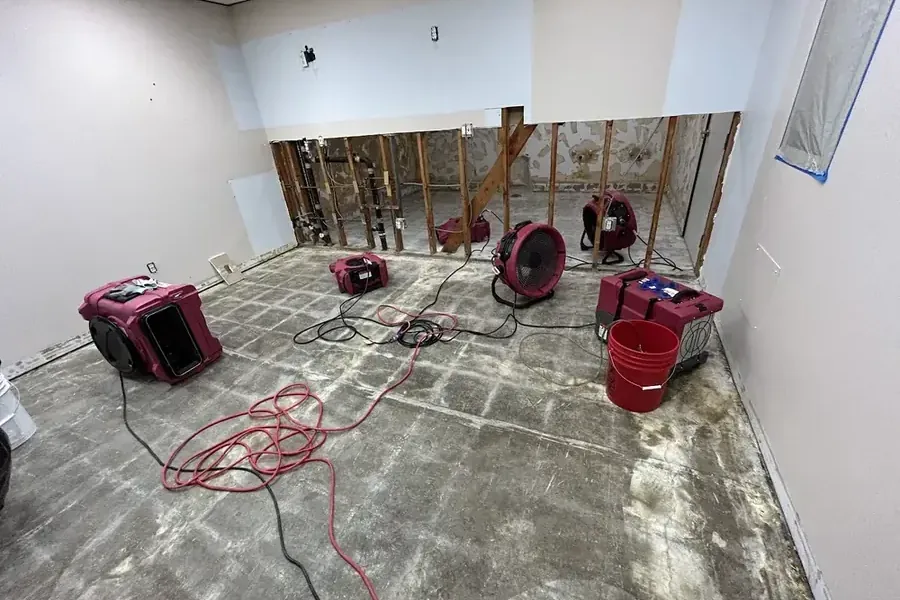
First moves for slab leak water damage
- 1
Watch the meter
Shut every fixture off and see if the meter still turns.
- 2
Close the main
Stop the water if the floor is getting wet.
- 3
Feel for warm spots
Heat on tile can mark a hot water pipe leak.
- 4
Take photos
Shoot the damp floor and the meter reading.
The standard behind every slab leak water damage job
Dispatch at any hour
Active water is treated as urgent around the clock, because drywall and pad keep wicking until extraction starts.
Dried to a reading
The drying team works to the IICRC S500 standard and pulls equipment only when the meters say dry.
A file the adjuster can use
Moisture maps, daily psychrometric logs and timestamped photos are taken before anything is torn out.
Built for Piedmont houses
Clay lots, walkout basements, crawl spaces and attic air handlers shape how water moves in these homes.
What does slab leak water damage cost in Buford, GA?
Expect roughly $1,500 to $10,000 or more for the water damage side of a slab leak, with the plumbing repair billed apart. A single room of lifted flooring is the low end and water under several rooms the high end; category, square footage, materials and drying speed decide it.
| Size of the loss | Typical range | What it usually covers |
|---|---|---|
| One room on the slab | $1,500 to $3,500 | Flooring lifted, Concrete dried, Baseboard reset |
| Several rooms | $3,500 to $7,000 | Pad replaced, Wall bottoms dried, Longer drying run |
| Whole floor area | $7,000 to $10,000+ | Tile or hardwood removed, Extended slab drying, Daily readings |
Ranges are typical, not a quote: the water category, square footage, material class and how fast drying started move the number most. Run the water damage cost calculator for a closer planning figure.
The slab leak water damage process from first reading to dry
- 1
Map
Thermal imaging and meters across the slab.
- 2
Lift
Wet flooring and baseboard taken up.
- 3
Dry
Air movers and dehumidifiers on the concrete.
- 4
Verify
Readings logged until the slab is dry.
Where a house or a garage in Buford sits on a concrete slab, a supply pipe can leak under the floor for weeks before anyone sees water. The city runs its own water department, so a monthly bill that jumps with no new use is often the first clue.
How a slab leak gives itself away
The leak rarely shows up where the pipe failed. Water travels under the concrete and rises into flooring and wall bottoms, sometimes several rooms over.
- Heat under tile above a hot water pipe
- Carpet or laminate that never dries out, with no leak in sight
- A hiss or trickle with all the taps closed
Fixing the pipe is the plumber's job; mapping and drying what the leak soaked is the restoration crew's. A pipe that bursts inside a wall is a different job, covered under burst pipe water damage.
Meter still turning with every tap shut off? Water under the slab keeps spreading until the pipe is fixed.
(888) 532-4616Have the damp slab scannedDrying the concrete and what sits on it
Concrete takes on water and lets it go slowly. Pad, laminate and floating floors above the wet zone are usually lifted so air can reach the slab, and baseboard is pulled to let the wall bottoms breathe.
- Flooring pulled back over the wet zone
- Air movers and LGR units aimed at the concrete
- Slab and bottom plate readings recorded each day
A slab outlasts the drywall
Concrete is usually the last material in the room to dry, often needing more than a week. Equipment keeps running until the slab reads the same as dry concrete elsewhere in the house.
Repairs and the claim
Insurers frequently handle three things separately: fixing the pipe, breaking into the concrete to reach it, and the water damage itself. Read your own policy or ask your insurer before work begins, and photograph the meter and the damp floor. The structural drying page explains how readings are taken.
Slab leak water damage across Buford and nearby communities
One dispatch covers every neighborhood listed here, around the clock.
Coverage runs across the 30518 and 30519 ZIP codes, from the historic downtown on Main Street and Shadburn Avenue to the Mall of Georgia area and communities such as River Falls, Hidden Falls and Hosch Reserve.
The same service nearby: slab leak water damage in Flowery Branch, Sugar Hill, Suwanee.
Slab Leak Water Damage questions in Buford, GA
What are the first signs of a slab leak?
A water meter that keeps moving with every fixture off, a warm patch on tile, carpet that stays damp with no source and the sound of running water under the floor. A plumber with leak detection tools confirms the spot.
Does insurance pay for slab leak water damage?
Insurers often pay for the resulting water damage after the deductible, but may treat the pipe fix and the cut through the concrete as separate items. Ask your own insurer what your policy covers before work starts.
How long does concrete take to dry after a slab leak?
Usually five to ten days, depending on how long water ran under the floor and what covers the slab. Daily readings show progress, and the equipment is removed once the concrete matches dry concrete elsewhere in the house.
Does all the flooring come up after a slab leak?
As a rule, only over the wet zone. Pad, laminate and floating floors trap moisture against concrete and come up so it can dry. Tile may stay in place if the meters show the slab drying through it.
Plumber or restoration crew: who does what after a slab leak?
Finding and fixing the broken pipe belongs to the plumber. The restoration crew takes on the water damage: mapping moisture, lifting flooring, drying the concrete and walls and recording each step for the claim.
Water under the concrete? Get the slab dried out now.
Wet flooring comes up, the concrete and wall bottoms are dried, and each day's readings are saved for the claim file.