
A backup in a tub, floor drain or toilet can come from two very different places. A home on the city sewer sends waste into the city's sanitary sewer, while a home on septic treats it in a tank on the property. Knowing which one backed up decides who gets the first report and how the cleanup is handled.
Key takeaways
- Homes connect either to the city sanitary sewer or to a septic tank, and the cause and the first report differ for each.
- The City of Buford Public Service Department runs the city sewer under a Georgia collection system permit.
- The city sewer page tells septic owners to have the system inspected and pumped at least once every three to five years.
- Septic tanks can be cleaned by firms permitted by the Gwinnett County Health Department.
- Sewage is contaminated water, so a backup is cleaned by a crew in protective gear and not mopped up like a spill.
City sewer or septic: finding out which the home has
The City of Buford runs its own sewer department. Homes connected to it send wastewater into the city's sanitary sewer, and homes that are not connected treat wastewater in a septic tank on the property.
- A sewer charge on the utility bill points to the city sewer
- A buried tank lid or an access riser in the yard points to septic
- Pumping records or an inspection report point to septic
- If neither is clear, the city sewer department can say whether the address is connected
If the home is on the city sewer
The City of Buford Public Service Department must meet the conditions of its Georgia collection system permit for the sanitary sewer system. A blockage in the city main belongs to that system.
Clues that the problem is bigger than one drain
A single slow drain usually means a clog in that fixture. Several fixtures backing up together points to the main pipe.
- Water coming up in the lowest tub, shower or floor drain when a toilet is flushed
- Gurgling in more than one drain
- Neighbors with the same problem
Why grease matters
Buford keeps excess oil and grease out of its sanitary sewer system and wastewater treatment plant through an Oil and Grease Removal policy under its Sewer Use Ordinance.
It is a reminder that cooking grease belongs in the trash, since it hardens in pipes and narrows them over time.
If the home has a septic tank
The city sewer page tells septic owners to have the system inspected and pumped at least once every three to five years. A tank that has gone past that mark can fill and push wastewater back toward the house.
Septic tanks can be cleaned by firms permitted by the Gwinnett County Health Department, so a tank problem starts with one of those firms.
- Slow drains throughout the house
- Gurgling in pipes when water runs
- Sewage odor near the tank or in the yard
- Wet or spongy ground over the tank area
Why a backup is not an ordinary spill
Sewage is contaminated water, usually called Category 3. It can carry bacteria and other harmful material, and it does not become safe when it dries.
That is why a backup is a job for a crew with protective gear, and not for a mop and a bucket.
Floor drains and basement fixtures are usually the first places a backup shows itself, because they sit at the lowest point of the plumbing system.
- Porous materials such as carpet padding, insulation and drywall that touched sewage are removed
- Hard surfaces are cleaned and treated
- Children, pets and anyone with a weak immune system should stay out of the area
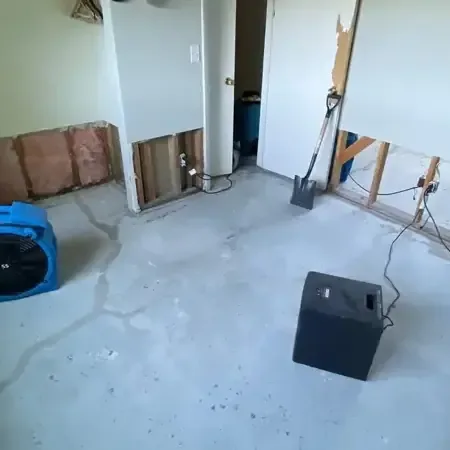
What the crew removes and dries
A sewage backup cleanup starts with removing the contaminated water. The crew uses water extraction equipment, then takes out materials that cannot be cleaned.
Once the contaminated materials are gone, structural drying removes moisture from what remains, and readings are repeated until the framing is dry.
- Contaminated water extracted from floors and low areas
- Wet porous materials removed and bagged
- Floors and framing cleaned and treated
- Moisture readings taken until the structure is dry
Reporting the backup, staying safe and keeping records
Three things happen at once after a backup: the right party gets the report, the household stays safe, and the records start.
Who gets the first report
The first report depends on the system. A backup on the city sewer is reported to the city, which runs its own sewer department and its own Public Service Department.
A backup at a septic tank starts with a firm permitted by the Gwinnett County Health Department.
Reporting early matters for the neighbors too. If the city main is blocked, other homes on the same pipe can be affected.
- City sewer: report to the City of Buford sewer department and describe which fixtures are affected
- Septic tank: contact a permitted firm to inspect and pump the tank
- Either way: stop using water in the house until the cause is found
While the cleanup is arranged
A few steps limit the spread and protect the household.
- Stop using sinks, tubs, showers and toilets, since more water only adds to the backup
- Keep children and pets out of the affected rooms
- Do not mix cleaning chemicals to treat the area
- Photograph the damage for the insurer before anything is moved
- Report the backup to the city if the home is on city sewer, or to a permitted firm if it has a tank
Insurance and records
Sewage backups are handled differently from burst pipes in many policies. Some policies cover them only with an added endorsement, and some set a lower limit.
The readings and photos from the cleanup are the proof the insurer will ask for, so they are worth keeping from the first day.
- Ask whether the policy includes sewer or drain backup coverage
- Ask whether the limit for backups is separate from the main limit
- Keep photos of the affected rooms before and after cleanup
- Keep the invoice from the city, the septic firm or the plumber who cleared the blockage
Questions
How do I know whether I am on the city sewer or a septic tank?
A sewer charge on the utility bill, a buried tank lid or old pumping records are the usual clues. The city sewer department can confirm whether an address is connected.
Does a sewage backup mean the whole street has a problem?
Not always. A single clogged drain on the property can cause one. If several fixtures back up together or neighbors have the same trouble, the main pipe is more likely the cause.
Can a sewage backup be cleaned without professional help?
Small spills from a single fixture can be handled with care, but a backup is contaminated water. Porous materials need to come out, and the area needs proper cleaning and drying.
Does insurance cover a sewage backup?
Coverage varies, and many policies need a separate endorsement for backups. Ask the insurer, and keep photos and records of the cleanup.
How often should a septic tank be pumped?
The city sewer page tells septic owners to have the system inspected and pumped at least once every three to five years. Firms permitted by the Gwinnett County Health Department can clean tanks.
What should be done with belongings that got wet?
Hard items such as metal, glass and sealed plastic can usually be cleaned and treated. Porous items such as rugs, cardboard and upholstered furniture that touched sewage are usually discarded.