
On Friday, July 24, 2026, almost seven inches of rain fell on Hall County. Flooded road closures and downed trees followed, and a flash flood warning covered Oakwood, Gainesville and Flowery Branch. A warning like that raises a fair question for homeowners: did the water get inside?
Key takeaways
- A National Weather Service flash flood warning describes conditions, and it is not a report of damage to any house.
- On July 24, 2026, almost seven inches of rain fell on Hall County, and officials told drivers not to drive through flooded roads.
- After a storm, check the roof, ceilings, garage and any low areas of the home before assuming everything stayed dry.
- Water that comes in from outside is treated as contaminated, so it is not handled like a spill from a sink.
- Extraction comes first, then structural drying checks and dries walls, floors and framing.
A warning is not damage
The National Weather Service issues a flash flood warning when flooding is happening or is expected soon. The message tells people to take care.
It does not say that a single house took on water. On July 24, 2026 the bulk of the rain was centered on Oakwood, Gainesville and Flowery Branch, and the warning covered those towns.
The practical step is simple: after the rain stops, go through the house and look.
The storm gave Hall County a lot to deal with in one day. These are the points officials and reports confirmed:
- Almost seven inches of rain fell on Hall County
- Flooded road closures and downed trees were reported
- Officials said drivers should not attempt to drive through flooded roadways
How storm water gets into a house
Water uses whatever opening it finds, and a storm like this one can test several at once.
From above
Downed trees and limbs can open a roof, and wind-driven rain can push past flashing and around windows. The first sign is often a stain on a ceiling or a drip at a light fixture.
- Ceiling stains that were not there before the storm
- Drips from light fixtures or vents
- Wet insulation in the attic
From the ground
Runoff can push under exterior doors and garage doors, and it can reach low areas of a home if the house has them. Flooded driveways and yards raise the risk.
- Water marks at the base of doors or walls
- Wet carpet near exterior doors
- A damp garage floor or wet items stored on it
Signs that are easy to miss
Water can wick up drywall and travel through insulation without a puddle in sight. A house can look dry on the surface and still hold water in the walls.
- Baseboards that swell or pull away from the wall
- Paint that bubbles or peels
- Doors that stick after the storm
- A musty smell that grows stronger over a few days
Why storm water is treated as contaminated
Water that crosses roads, yards and drains carries soil and whatever else it picked up on the way. Restoration crews treat it as contaminated, usually called Category 3.
That changes the work. Porous materials that sat in it are removed instead of dried, and hard surfaces are cleaned and treated.
Soil, fertilizer, fuel and debris are common in runoff, and none of that belongs in a living space. The rule of thumb is simple: if the water came from outside the house, treat it as unsafe until the cleanup is done.
- Carpet padding, insulation and drywall that sat in storm water usually come out
- Hard surfaces are cleaned and treated
- Boots and gloves protect anyone helping with the cleanup
First steps once the rain stops
The first day is about safety and records, not a full cleanup.
- Stay out of water that may touch outlets, cords or appliances
- Turn off power to flooded areas from a dry spot
- Photograph every wet area before moving anything
- Move belongings to a dry place
- Keep children and pets away from standing water
- Do not drive through flooded roads while checking on a property
How extraction and drying work
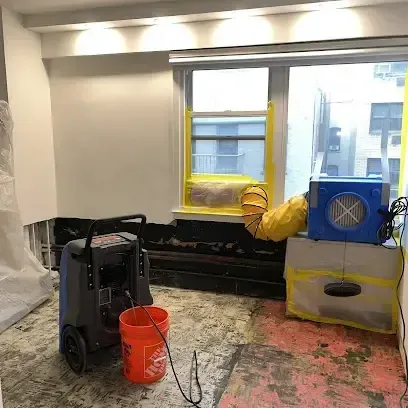
A storm and flash flood cleanup starts with the water that can be seen. The water extraction crew pumps and vacuums standing water, then removes materials that cannot be saved.
After that, structural drying takes over. Moisture meters show where water traveled, and drying equipment runs until readings return to a normal level.
Photos and readings are kept for the insurer, and homeowners can find more on water damage help in Gainesville.
- Standing water pumped and vacuumed from floors
- Wet carpet pad, insulation and soaked drywall removed where needed
- Moisture meters used on walls, floors and framing
- Drying equipment run until readings return to a normal level
What drying readings tell a homeowner
A house is not dry just because the surface feels dry. Moisture meters measure what is inside drywall, framing and flooring, and the numbers decide whether the drying work can stop.
Readings are taken on the first day and repeated while equipment runs. They are compared with a dry reference reading from a part of the house that never got wet.
- A first set of readings maps the wet area
- Repeat readings show whether the drying is working
- A final set of readings shows when the equipment can come out
- Notes and photos stay with the claim file
Talking with the insurer after a storm
Storm and flood coverage varies by policy. Wind-driven rain through a damaged roof is often treated differently from rising water at ground level, so the wording matters.
A call to the insurer early on clarifies what is covered and what records are needed. Photos taken before cleanup and readings taken during drying make that conversation easier.
- Photograph each wet room and the outside of the house before moving anything
- Keep receipts for emergency steps such as extraction and drying
- Write down the time the rain stopped and when the water was noticed
- Ask whether flood damage and wind-driven rain are handled as separate claims
Questions
Does a flash flood warning mean my house is flooded?
No. A warning says flooding is happening or expected in an area. Whether water entered a particular house is something only a walk-through can answer.
How do I know if floodwater got into the walls?
Swollen baseboards, bubbling paint and a musty smell are common signs. A moisture meter shows what the eye misses, so a reading is more reliable than a look.
Is it safe to stay in the house after a flood?
It depends on the power and the contamination. If water is touching outlets or appliances, leave the power off and stay out until the electrical system is checked.
Should I wait for the insurance adjuster before cleanup begins?
Take photos first, then start the steps that limit further damage. Policies commonly expect reasonable steps to protect the property, so ask the insurer what it needs.
Can wet carpet be saved after storm water?
Sometimes the carpet can be cleaned, but the pad under it is usually removed. Contaminated water changes the decision, so the crew checks the source of the water first.
What should be thrown away after storm water gets in?
Porous items that sat in the water, such as carpet pad, insulation, particleboard furniture and stuffed items, are usually discarded. Hard items can often be cleaned and treated.