Crawl Space Water Removal in Buford, GA
Standing water under a house stays hidden while it soaks floor joists, insulation and the vapor barrier. The extraction crew in Buford pumps it out, dries the space and checks what the moisture reached.
(888) 532-4616Water under the floor? Call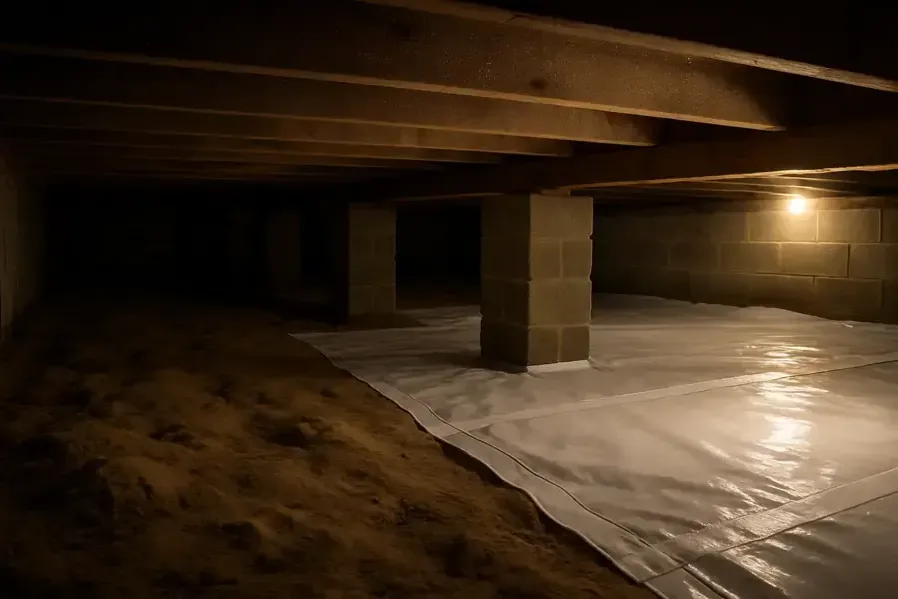
First moves for crawl space water removal
- 1
Stay out if unsure
Do not enter a space with standing water near wiring.
- 2
Shut off the source
Close the supply valve if a pipe is leaking below the floor.
- 3
Check the vents
Clear any blocked foundation vents so air can move.
- 4
Photograph from the access
Shoot the water and insulation from the opening.
The standard behind every crawl space water removal job
Dispatch at any hour
Active water is treated as urgent around the clock, because drywall and pad keep wicking until extraction starts.
Dried to a reading
The drying team works to the IICRC S500 standard and pulls equipment only when the meters say dry.
A file the adjuster can use
Moisture maps, daily psychrometric logs and timestamped photos are taken before anything is torn out.
Built for Piedmont houses
Clay lots, walkout basements, crawl spaces and attic air handlers shape how water moves in these homes.
What does crawl space water removal cost in Buford, GA?
Pumping out and drying a crawl space runs $1,500 to $3,500, and replacing insulation and the barrier moves the total to $3,500 to $6,500. Sewage under the floor is a larger job at $6,500 to $10,000 or more.
| Size of the loss | Typical range | What it usually covers |
|---|---|---|
| Pump out and dry | $1,500 to $3,500 | Water pumped out, Joists dried, Readings logged |
| Insulation and barrier | $3,500 to $6,500 | Wet insulation removed, Barrier replaced, Vents checked |
| Sewage under the floor | $6,500 to $10,000+ | Protective gear used, Contaminated material removed, Surfaces disinfected |
Ranges are typical, not a quote: the water category, square footage, material class and how fast drying started move the number most. Run the water damage cost calculator for a closer planning figure.
The crawl space water removal process from first reading to dry
- 1
Trace
Source of the water found.
- 2
Pump
Standing water removed.
- 3
Strip
Wet insulation pulled out.
- 4
Dry
Equipment runs until joists read dry.
Where a home has a crawl space, water collecting underneath is easy to miss because nobody walks there. A musty smell, a soft spot in the floor or higher indoor humidity is often the first sign that something is wrong below.
What the pump-out involves
Crew members enter in protective gear, set a submersible pump and run hoses out of the space. Shallow water is removed with wet vacuums.
- The source is found, whether a pipe, a drain or rain
- Saturated insulation is pulled down and bagged out
- Pooled water is pumped to a safe discharge point
Dry air is then moved through the space with dehumidifiers and air movers sized to the footprint. Readings on the joists and subfloor show when the wood has returned to a normal level.
Water pooling beneath the floor? The joists and subfloor take on moisture the longer it stays.
(888) 532-4616Clear the crawl space waterBarrier, insulation and the floor above
A torn or displaced vapor barrier lets ground moisture rise into the floor system. The drying team checks it, flags sections that need replacing and reports what the floor above has absorbed.
- Joists and subfloor tested with a meter
- Vapor barrier inspected for tears and gaps
- Insulation replaced only after the wood is dry
Why crawl spaces stay damp
Air in a closed space under a house moves slowly, so humidity lingers and wood can hold moisture a long time. Dehumidifiers pull that moisture out faster than waiting for it to evaporate.
Related repairs
A leak from a supply pipe under the floor is covered in burst pipe water damage, and wet framing above the space follows structural drying. Sewage found under the floor is a contaminated job with its own price tier.
Crawl space water removal across Buford and nearby communities
One dispatch covers every neighborhood listed here, around the clock.
Crawl space jobs are handled in both Buford ZIP codes, 30518 and 30519, in communities from Habersham Hills, with a 1985 median build year, to Hidden Falls and Hedgerows, which both show 2005.
The same service nearby: crawl space water removal in Flowery Branch, Sugar Hill, Suwanee.
Crawl Space Water Removal questions in Buford, GA
How can water under a house be spotted?
Signs include a musty smell, a spongy floor, higher indoor humidity and pests drawn to damp. A look through the access opening with a flashlight shows standing water or sagging insulation.
Does a crawl space need a vapor barrier?
A barrier of heavy plastic over the ground slows moisture rising into the space. When it tears or shifts, humidity climbs and the joists above stay damp longer. Inspection is part of every water removal job.
Can wet crawl space insulation be reused?
Rarely. Insulation that has been soaked holds water against the subfloor and loses much of its value. It is usually removed and replaced after the framing has dried.
Is sewage under the house handled differently?
Yes. Sewage means contaminated water, so the crew wears protective gear, removes porous materials that touched it and disinfects the surfaces. It is the highest cost tier for crawl space work.
Does insurance pay for crawl space water removal?
Coverage depends on the cause. A burst pipe or appliance leak is often covered, while groundwater and seepage may not be. The adjuster will want photos from the access opening and the drying records.
Water under the house? Get it pumped and dried.
The space is pumped, wet insulation comes out, and readings on the joists go into the claim file.