Crawl Space Water Removal in Cumming, GA
Standing water under a raised floor wets joists, subfloor and insulation where no one sees it. The extraction crew pumps the space out, dries the framing above and confirms on site whether the home has a crawl space.
(888) 532-4616Cumming water under the house help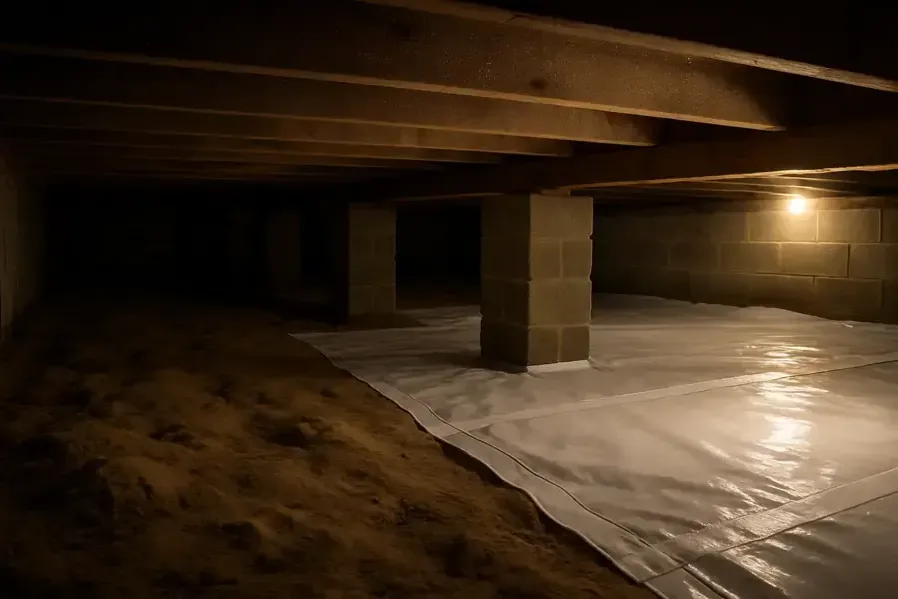
First moves for crawl space water removal
- 1
Look from the access
Check the depth and the water source from the opening.
- 2
Set the pumps
Stage pumps at low spots and run hoses out.
- 3
Pull wet insulation
Remove sagging batts that hold water.
- 4
Dry the framing
Run air movers and a dehumidifier below the floor.
The standard behind every crawl space water removal job
Dispatch at any hour
Active water is treated as urgent around the clock, because drywall and pad keep wicking until extraction starts.
Dried to a reading
The drying team works to the IICRC S500 standard and pulls equipment only when the meters say dry.
A file the adjuster can use
Moisture maps, daily psychrometric logs and timestamped photos are taken before anything is torn out.
Built for Piedmont houses
Clay lots, walkout basements, crawl spaces and attic air handlers shape how water moves in these homes.
What does crawl space water removal cost in Cumming, GA?
Pumping out and drying a crawl space typically costs $1,500 to $3,500. Adding insulation and barrier work runs $3,500 to $6,500, and sewage under the floor pushes the job to $6,500 to $10,000 or more.
| Size of the loss | Typical range | What it usually covers |
|---|---|---|
| Pump out and dry | $1,500 to $3,500 | Pumps staged at low spots, Framing dried, Readings taken |
| Insulation and barrier | $3,500 to $6,500 | Wet insulation removed, Barrier checked, Extended drying |
| Sewage under the floor | $6,500 to $10,000+ | Contaminated rules, Sanitizing, Protective gear |
Ranges are typical, not a quote: the water category, square footage, material class and how fast drying started move the number most. Run the water damage cost calculator for a closer planning figure.
The crawl space water removal process from first reading to dry
- 1
Pump
Water leaves through long hoses.
- 2
Pull
Soaked insulation comes out.
- 3
Dry
Air movers work the framing.
- 4
Verify
Meters confirm the space is dry.
A crawl space hides trouble. Water can sit under a floor for days before a soft spot or a smell gives it away, and by then the framing above has been drinking from it. Whether a given Cumming house has a crawl space is confirmed on site before any work is priced. Wet insulation, a damp odor under the floor or a spongy spot in the flooring above are the usual signs that water has been sitting there.
Getting the water out
The tight space limits equipment, so the crew works with small pumps, long hoses and a lot of patience.
- Small pumps staged at the low points
- Hoses run out to a safe drainage spot
- Wet vacuums for thin pools along the barrier
If the water carries a sewage odor, work stops and the job is handled under contaminated rules instead.
Standing water under the floor? Do not crawl in alone and call for a pump-out.
(888) 532-4616Report water beneath the floorJoists, subfloor and insulation
Once the pool is gone, the damp framing above is the real problem. Insulation soaked with water sags, holds moisture against the subfloor and is normally removed.
- Moisture meters on joists and subfloor
- Wet insulation pulled and bagged
- Air movers angled along the floor system
The barrier matters
A plastic vapor barrier on the ground lets moisture rise into the space. A torn or missing sheet is noted so the owner can have it repaired after the drying.
Finishing the job
The space is rechecked with meters before equipment leaves. Related help includes storm and flash flood cleanup and the Cumming water damage hub. Photos of the standing water and the wet joists are taken before pumping begins.
Crawl space water removal across Cumming and nearby communities
One dispatch covers every neighborhood listed here, around the clock.
Crawl space calls come from Cumming homes that have one, from Vickery to Windermere, and from nearby Forsyth County neighborhoods along the Georgia 400 corridor, with each house checked on site.
The same service nearby: crawl space water removal in Flowery Branch, Sugar Hill, Buford.
Crawl Space Water Removal questions in Cumming, GA
How is a crawl space checked for water?
The crew looks through the access, measures depth and uses a moisture meter on the joists above, since framing can hold water even when the ground looks dry.
Does the vapor barrier need replacing?
Only when it is torn, missing or soaked in a way that lets moisture rise. The crew notes its condition so the owner can decide on repair.
Is wet insulation always removed?
Batt insulation that has soaked and sagged usually is, because it holds moisture against the floor. Meter readings decide the rest.
What causes water to collect under a house?
Heavy rain, a leaking drain pipe or a plumbing break can all send water into the space. The source is traced so the pump-out is not wasted.
Can the water under the floor affect the rooms above?
Yes. Moisture rises into the subfloor and flooring, which can cup hardwood and soften particleboard, so the floor system is dried as part of the job.
Is it safe to go into a crawl space with standing water?
Usually not alone. Wet crawl spaces can hide electrical hazards, sharp debris and sewage, so the crew checks power and air before anyone works inside.
Water in the space beneath the house? Get it pumped.
The extraction crew checks the space on site, pumps it clear, pulls ruined insulation and dries the framing with meters guiding each step.