Slab Leak Water Damage in Cumming, GA
A pressure leak under a concrete floor pushes water up through seams and into the flooring above. Local water damage experts trace it, lift the wet flooring and dry the slab and the walls beside it.
(888) 532-4616Call about water under the floor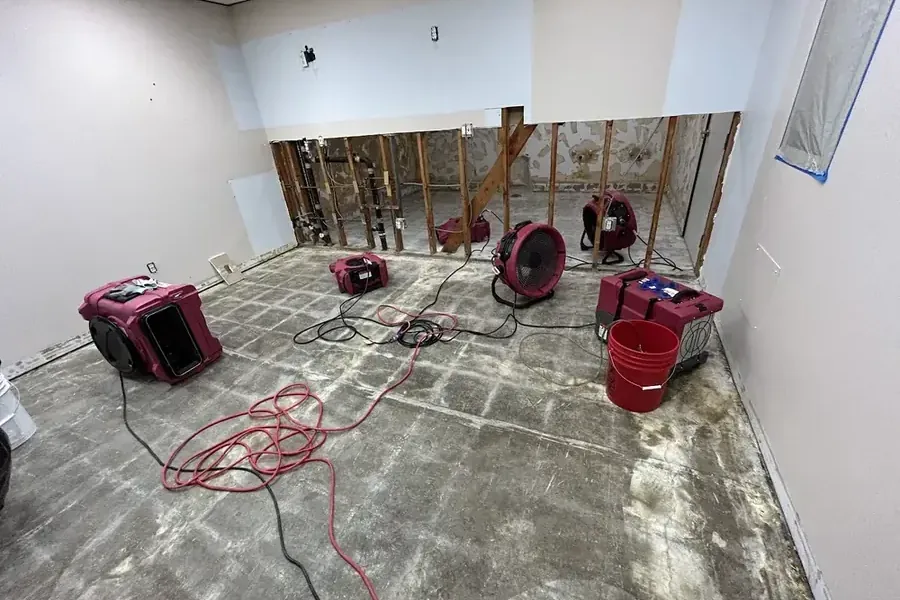
First moves for slab leak water damage
- 1
Read the dial
Close every tap and see if the dial still moves.
- 2
Walk the rooms
Note warm tile, damp carpet or a musty smell.
- 3
Keep flooring down
Leave it in place until it has been photographed.
- 4
Report the signs
Describe the damp spot and when it first showed.
The standard behind every slab leak water damage job
Dispatch at any hour
Active water is treated as urgent around the clock, because drywall and pad keep wicking until extraction starts.
Dried to a reading
The drying team works to the IICRC S500 standard and pulls equipment only when the meters say dry.
A file the adjuster can use
Moisture maps, daily psychrometric logs and timestamped photos are taken before anything is torn out.
Built for Piedmont houses
Clay lots, walkout basements, crawl spaces and attic air handlers shape how water moves in these homes.
What does slab leak water damage cost in Cumming, GA?
A slab leak that wets one room usually costs $1,500 to $3,500 to dry. Several rooms run $3,500 to $7,000, and a whole floor area can reach $7,000 to $10,000 or more, before any plumbing work.
| Size of the loss | Typical range | What it usually covers |
|---|---|---|
| One room over the slab | $1,500 to $3,500 | Flooring lifted, Slab dried, Baseboards reset |
| Several rooms | $3,500 to $7,000 | Rooms mapped, Longer slab drying, Wall bases opened |
| Whole floor area | $7,000 to $10,000+ | Whole level dried, Extended monitoring, Full documentation |
Ranges are typical, not a quote: the water category, square footage, material class and how fast drying started move the number most. Run the water damage cost calculator for a closer planning figure.
The slab leak water damage process from first reading to dry
- 1
Locate
The wet zone is mapped on the floor.
- 2
Uncover
Wet flooring comes up.
- 3
Dry
Equipment pulls moisture from the concrete.
- 4
Test
Depth readings confirm the concrete is dry.
Water under a slab rarely announces itself. A warm spot on the floor, a meter that spins with every tap closed or a damp patch under carpet can be the first clue. Not every house has a slab, so the crew checks what is under the floor first.
Finding the leak
Thermal imaging shows warm or cool patterns in the floor, and meters confirm where the concrete and flooring are wet. A plumber then pinpoints the pipe with leak detection tools.
- Hot-water leaks leave warm spots on tile
- Cold-water leaks show as damp edges
- Baseboards wick water up the wall
The wet area is mapped on paper before anything is lifted, so the lifting is limited to what is actually wet.
A warm floor or a meter that spins with every tap off can mean water is running beneath the slab.
(888) 532-4616Get the leak tracedLifting the flooring and drying the slab
Wet flooring is cut and removed so air can reach the concrete. Dehumidifiers and air movers then pull moisture from the slab, which dries slowly, and readings are taken across the surface until the numbers settle.
- Carpet, pad or planks lifted
- Baseboards removed for airflow
- Concrete readings logged each visit
Concrete dries slowly
A slab holds water longer than wood or drywall, so the drying run can outlast the rest of the job. Surface readings alone can mislead, which is why depth checks are used.
After the leak is found
The plumber repairs or reroutes the pipe, and the floor is rebuilt once readings are normal. Meters and thermal imaging are also run on the walls along the leak path. For leaks in walls or ceilings see burst pipe water damage, and for extra moisture in framing see structural drying.
Slab leak water damage across Cumming and nearby communities
One dispatch covers every neighborhood listed here, around the clock.
Slab leak work covers Cumming homes where the floor sits on concrete, from Vickery townhomes to houses in Windermere and Creekstone Estates, plus nearby Forsyth County neighborhoods. Each house is checked on site.
The same service nearby: slab leak water damage in Flowery Branch, Sugar Hill, Buford.
Slab Leak Water Damage questions in Cumming, GA
How can a slab leak be spotted?
Warm spots on the floor, a water meter that turns with everything off, a sudden bill increase or the sound of running water are common signs. A plumber confirms with detection tools.
Does the concrete have to be removed?
Usually not for drying. The slab stays in place while flooring comes up and equipment pulls moisture from it. Concrete work is only a plumbing matter if the pipe must be reached.
Can hardwood and tile be saved?
Tile often survives, with the grout and the subsurface checked. Hardwood over a wet slab usually cups and is replaced, since drying it in place is slow and uncertain.
Is a slab leak covered by homeowners insurance?
Policies differ. Many cover the resulting water damage from a sudden leak but not the cost of reaching or repairing the pipe. The adjuster decides, so the leak path and readings should be documented.
How long does a slab take to dry?
Longer than wood or drywall. Concrete releases moisture slowly, so equipment may run for many days. Readings, not a calendar, decide when the flooring can go back.
Will the leak affect the walls?
Yes. Water that surfaces at the slab edge wicks into baseboards and the bottom of the drywall, so the wall bases are opened and checked with a meter.
Leak under the floor soaking the house? Call for drying.
Local water damage experts map the wet zone, lift the flooring and dry the slab and wall bases, with depth readings saved for the file.