Slab Leak Water Damage in Gainesville, GA
Water that escapes beneath a concrete floor rises into flooring and wall bottoms without leaving a pool. After the plumber fixes the pipe, the restoration team lifts what is wet and dries the slab.
(888) 532-4616Damp floor with no source? Call now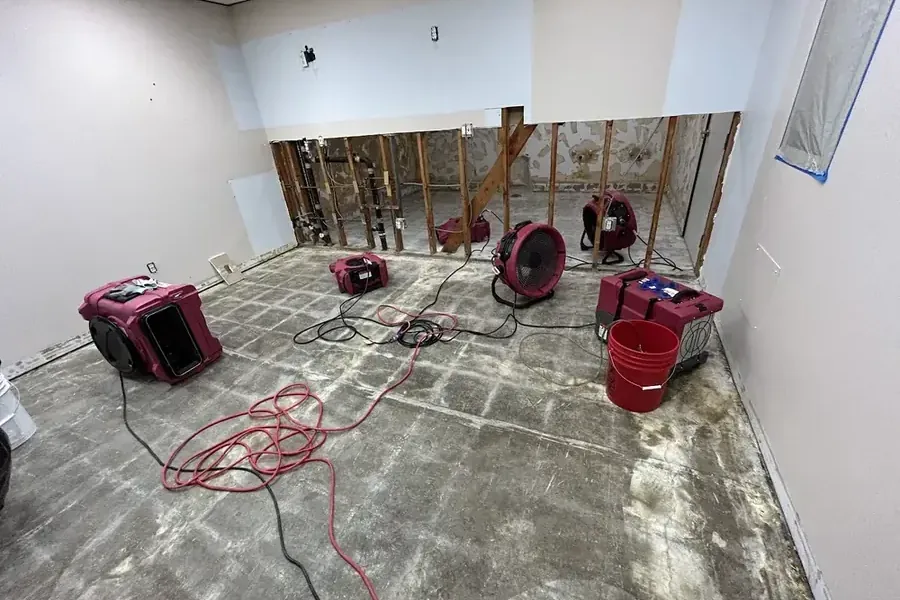
First moves for slab leak water damage
- 1
Test the meter
With all fixtures off, check whether the meter dial keeps turning.
- 2
Shut the valve
Close the main if water is showing on the floor.
- 3
Check floor temperature
A hot patch under tile suggests a hot water pipe.
- 4
Record the damage
Photograph the damp area and the meter.
The standard behind every slab leak water damage job
Dispatch at any hour
Active water is treated as urgent around the clock, because drywall and pad keep wicking until extraction starts.
Dried to a reading
The drying team works to the IICRC S500 standard and pulls equipment only when the meters say dry.
A file the adjuster can use
Moisture maps, daily psychrometric logs and timestamped photos are taken before anything is torn out.
Built for Piedmont houses
Clay lots, walkout basements, crawl spaces and attic air handlers shape how water moves in these homes.
What does slab leak water damage cost in Gainesville, GA?
A slab leak usually adds $1,500 to $10,000 or more for the drying and flooring work, with the plumbing and concrete repair billed on its own. The number of rooms over the wet zone and the type of flooring set where a job lands.
| Size of the loss | Typical range | What it usually covers |
|---|---|---|
| Single room over the slab | $1,500 to $3,500 | Flooring cut back, Concrete dried, Trim removed |
| Several rooms | $3,500 to $7,000 | Pad discarded, Wall bottoms vented, Longer equipment run |
| Entire floor area | $7,000 to $10,000+ | Hard flooring removed, Prolonged slab drying, Daily slab checks |
Ranges are typical, not a quote: the water category, square footage, material class and how fast drying started move the number most. Run the water damage cost calculator for a closer planning figure.
The slab leak water damage process from first reading to dry
- 1
Trace
A thermal camera outlines the wet zone.
- 2
Open
Wet flooring and trim are cut back.
- 3
Dry
Dehumidifiers and air movers work the slab.
- 4
Confirm
Readings continue until the concrete reads dry.
A home built over a concrete slab hides its supply pipes under the floor, so a leak there can run quietly for a long time. The usual tip-offs are a water bill that climbs without any new use and flooring that stays damp however often it is cleaned.
Reading the signs of a hidden leak
Water seldom surfaces where the pipe broke. It spreads beneath the concrete, then seeps up through cracks and expansion joints, sometimes in a room far from the source.
- A floor that feels warm over a hot water pipe
- Carpet or laminate that stays damp for no clear reason
- Running water heard while every fixture is off
Finding and fixing the pipe belongs to a plumber, who may need to cut into the concrete. The restoration crew takes over the wet area afterward. Water inside a wall cavity is handled as burst pipe water damage instead.
Floor staying damp with no visible leak? Water beneath the concrete can keep traveling until the pipe is repaired.
(888) 532-4616Get the floor scannedGetting the concrete and the flooring dry
Concrete soaks up water and surrenders it slowly, so the surface above must be opened. Carpet, pad and floating floors over the wet zone come up, and baseboard is pulled so the wall bottoms can vent.
- Wet flooring cut back past the damp edge
- Portable dehumidifiers and air movers run on the slab
- Daily moisture checks on concrete and wall plates
The slab lags behind everything else
Trim, pad and drywall dry long before the concrete does. The equipment stays until readings from the slab match those taken from concrete that never got wet elsewhere in the home.
Claims and repair costs
Insurance often splits a slab leak into the pipe repair, the concrete work and the water damage, and each may be covered differently. Talk to your carrier before demolition, and photograph the meter and the wet floor first. How readings are taken is covered under structural drying.
Slab leak water damage across Gainesville and nearby communities
One dispatch covers every neighborhood listed here, around the clock.
Slab leak work covers the city, from Downtown Gainesville and the Industrial Boulevard area to homes near the Lake Lanier shoreline, with ZIP 30506 inside the service area.
The same service nearby: slab leak water damage in Flowery Branch, Buford, Sugar Hill.
Slab Leak Water Damage questions in Gainesville, GA
How do plumbers locate a leak under a slab?
They use acoustic listening gear, pressure tests or thermal imaging to pinpoint the break. The restoration crew then maps where the water traveled, using the plumber's findings to steer that mapping.
What happens to the flooring over a slab leak?
Water rising through the concrete cups wood, loosens glued floors and soaks carpet pad. Tile may look fine while the mortar and slab beneath stay wet, so readings decide what comes up.
Does the concrete always have to be broken?
Often the plumber cuts through to reach the pipe, though some repairs reroute the pipe overhead instead. Drying can begin after the repair or alongside it, depending on access.
Why does concrete dry so slowly?
It is dense and holds water deep inside, so airflow pulls the moisture out gradually. Equipment stays in place until readings match concrete that was never wet.
Is a slab leak covered by insurance?
Policies differ, and some split the pipe, the access cut and the water damage into separate items. Raise it with your carrier early, and keep the plumber's report next to the drying readings.
Slab leak in Gainesville? Get the floor dried.
The crew traces the wet zone, lifts the flooring and dries the concrete, saving each visit's readings for the claim file.