Crawl Space Water Removal in Gainesville, GA
Water that collects under a house is out of sight but not out of reach of the floor above it. The extraction crew pumps it out and dries the joists, subfloor and insulation it touched.
(888) 532-4616Water under the house? Call now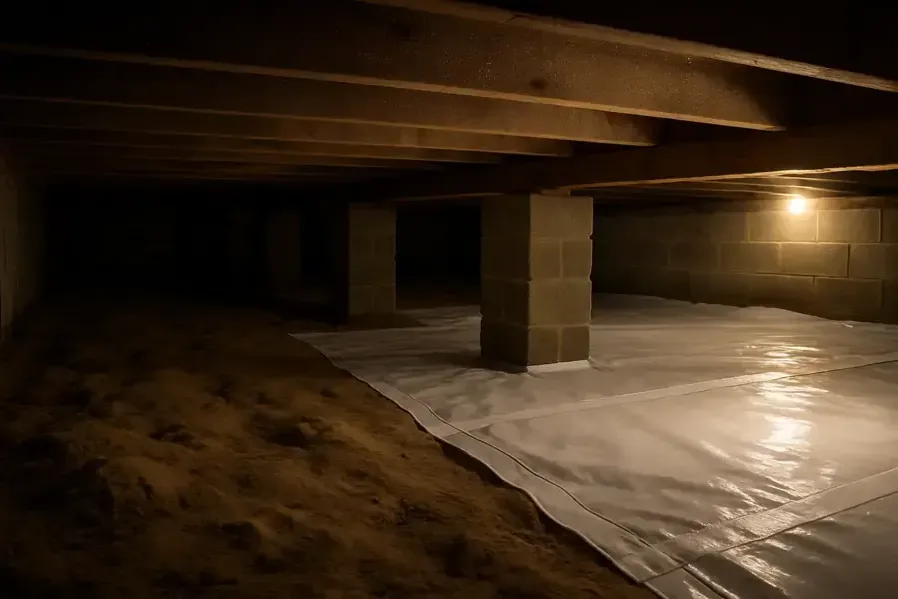
First moves for crawl space water removal
- 1
Look from outside
Check the vents and the ground around the house for pooling.
- 2
Stay out of the space
Crawl spaces hold wiring, ducts and uneven ground.
- 3
Note the smell
A musty or sewage odor helps the crew plan the work.
- 4
Photograph the signs
Cupped flooring and stains upstairs help the claim.
The standard behind every crawl space water removal job
Dispatch at any hour
Active water is treated as urgent around the clock, because drywall and pad keep wicking until extraction starts.
Dried to a reading
The drying team works to the IICRC S500 standard and pulls equipment only when the meters say dry.
A file the adjuster can use
Moisture maps, daily psychrometric logs and timestamped photos are taken before anything is torn out.
Built for Piedmont houses
Clay lots, walkout basements, crawl spaces and attic air handlers shape how water moves in these homes.
What does crawl space water removal cost in Gainesville, GA?
Expect roughly $1,500 to $10,000 or more for a wet crawl space. A simple pump out and dry is the low end, and sewage under the floor is the high end, with insulation, barrier work and access setting where a job lands.
| Size of the loss | Typical range | What it usually covers |
|---|---|---|
| Pump out and dry | $1,500 to $3,500 | Standing water pumped, Framing dried, Readings logged |
| Insulation and barrier | $3,500 to $6,500 | Wet insulation removed, Barrier cleaned or replaced, Extended drying |
| Sewage under the floor | $6,500 to $10,000+ | Contaminated water removed, Soil and framing cleaned, Sanitizing done |
Ranges are typical, not a quote: the water category, square footage, material class and how fast drying started move the number most. Run the water damage cost calculator for a closer planning figure.
The crawl space water removal process from first reading to dry
- 1
Locate
The crew finds the water source.
- 2
Pump
Standing water is pumped out.
- 3
Strip
Wet insulation and damaged barrier come out.
- 4
Dry
Airflow and dehumidifiers work the framing.
A crawl space sits low and stays damp, so rain runoff or a leaking pipe can leave water under the floor for days before any sign shows upstairs. Cupped flooring, a musty smell or a sagging floor are often the first hints that the space below needs attention.
How water gets under a house
Runoff from a heavy storm can seep in through foundation vents, while a leaking supply or drain pipe adds water from inside. Either way, it collects in the low spots.
- Pooling water around the piers
- Wet or fallen insulation
- Plastic sheeting holding water against the soil
The crew crawls in with pumps and lights, locates the water and its source, and checks the framing overhead with meters. A plumber or contractor then fixes the cause.
Water under the house? It keeps humidity high for the whole structure and feeds odors upstairs.
(888) 532-4616Get the crawl space drainedDrying the framing and the floor above
Joists and subfloor soak up moisture from below and dry slowly. Air movers and dehumidifiers are staged so airflow passes through the space and the readings in the wood fall toward a dry reference.
- Insulation removed where it is soaked
- Vapor barrier lifted, cleaned or replaced
- Joist and subfloor readings logged
Why standing water matters
Water under a house keeps humidity high for the whole structure. Left alone, it feeds odor, swelling floors and the 24 to 48 hour window for mold growth, so removing it early protects the rooms above.
Before the crew comes
Keep the access area clear of stored items and note where the water enters, if known. For sewage in the space, sewage backup cleanup applies instead, and structural drying covers how wet framing is brought back to a dry reading.
Crawl space water removal across Gainesville and nearby communities
One dispatch covers every neighborhood listed here, around the clock.
Crawl space jobs run across the city, from Downtown Gainesville to homes near the Lake Lanier shoreline, the Elachee Nature Science Center and the rest of ZIP 30506.
The same service nearby: crawl space water removal in Flowery Branch, Buford, Sugar Hill.
Crawl Space Water Removal questions in Gainesville, GA
How do I know there is water in my crawl space?
Musty odors, cupped or bouncy floors, condensation on ducts and puddles seen through an access panel are the usual signs. A pest or humidity problem often follows if the water stays. Standing water also draws pests and raises humidity in the rooms above.
Can the water be pumped out without going under the house?
Usually not. A crew has to enter the space to place pumps in the low spots, find the source and check the framing overhead with meters. The access panel sets how easy that is.
What happens to wet insulation?
Wet batts hold water against the subfloor and sag, so they are normally removed and bagged. Dry insulation nearby can stay if readings confirm it. That keeps the job smaller.
Will the vapor barrier be replaced?
Sometimes. Sheeting that is intact can be cleaned and dried, but torn or contaminated sheeting is replaced so it can hold back soil moisture again.
Is sewage under the floor handled differently?
Yes. It is Category 3 water, so the crew removes the contaminated material, cleans the soil surface and framing and sanitizes before any drying equipment goes in.
Crawl space flooded in Gainesville? Get it pumped.
The crew pumps out the water, removes wet insulation and dries the joists and subfloor, with readings kept for the file.